
 Live Radio
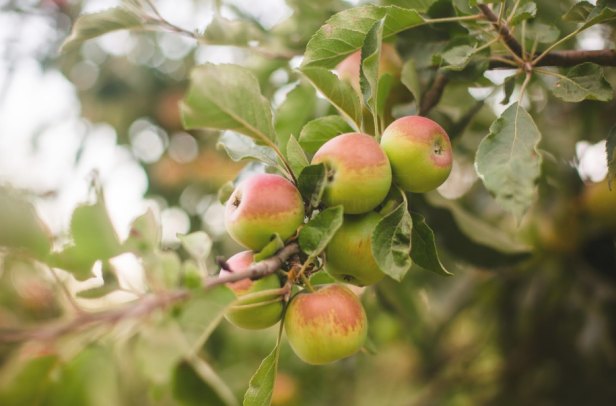 photo credit: Courtesy of Amber Elizabeth
They were to western Sonoma County what Kona is to macadamia nuts, or sockeye salmon to Bristol Bay: a food emblematic of the region, a comestible that simultaneously drove the local economy and served as a cultural icon.
But that was many years ago. Gravenstein apple orchards were once ubiquitous in the rolling hills and fertile vales surrounding the town of Sebastopol. Back then, close to 15,000 acres of "Gravs" grew here, and several large processors turned the fruit into sauce, cider and vinegar for distribution across the nation. And now?
"I think maybe there's 600 to 800 acres left," said Stan Devoto, a Sebastopol area farmer who cultivates 46 acres -- mainly apples, including Gravensteins, but also some wine grapes and cut flowers. "People love Gravensteins. They're a very early apple, they have great acidity and tremendous flavor complexity, but there are also a lot of things working against them in the marketplace."
Among those qualities are the variety's thin skin and subsequent susceptibility to bruising, making them difficult to transport and store. The trees also tend to drop fruit during warm weather, and the harvest season is short.
"Really, the season is only two to three weeks long," said Devoto. "Prior to atmosphere-controlled cold storage that wasn't a problem. You'd start out with Gravs, follow them up with Jonathans in September, and then move on to Pippins, then Golden and Red Delicious, and finish up with Rome Beauties in December. But modern storage has changed all that -- people can get different apples at any time of the year now."
Also suppressing the Gravenstein's fortunes is the ongoing closure of fruit processors in the west county, said Devoto.
"At one time there were at least five processors out here turning Gravensteins into sauce, cider and dried apples," Devoto said. "All the ones that had dropped to the ground were used for vinegar. Now the last processor, Manzana, plans to move its operations to Washington state, probably by the end of the year."
While that may sound like a death knell for the county's few remaining Gravenstein growers, it's probably not that big of a deal in the long run, Devoto said. The problem is bigger than that.
"Even with an operating regional processor, growing large acreages of Gravensteins probably isn't sustainable," he said. "[Manzana] is paying maybe $400 to $450 a ton, and you can get, say, 12 tons to the acre. So that's only about $6,000 an acre gross. With taxes and the expenses of pruning, thinning, cultivating, spraying and harvesting, you're underwater. You can't make it work."
The woes of the west county's Gravenstein orchards aren't new -- the trees have been gradually disappearing for years, replaced with wine grape vineyards. The climatic conditions that give Gravensteins their high acidity and appealing flavors also apply to grapes. Cool, foggy nights and warm but not hot days work the same magic on wine grapes, particularly Burgundian varieties such as pinot noir and chardonnay. Until a couple of years ago, west county chardonnay and pinot noir fruit drew particularly high prices from the North State's premium winemakers.
But things have changed, observed Dave Hale, a friend of Devoto's and a fellow apple grower. There is now a glut of wine grapes -- including high quality wine grapes -- in the state, said Hale. He noted American drinking habits have changed dramatically over the past decade, particularly for Gen Z imbibers. Simply put, they're drinking far less alcohol than Millennials, Gen X and Boomers -- who, for their part, are also cutting back on the booze. The trend is particularly pronounced for wine, which is increasingly viewed as an expensive fetish item rather than a "moderate" beverage ideally suited as an accompaniment to food.
The result: vineyards are being abandoned or ripped out at an accelerating pace in western Sonoma County. And while some Gravenstein aficionados think that could give their favorite apple a reprieve, they shouldn't get their hopes up, said Hale.
"At this point, it's not really a matter of grapes coming out and apples, including Gravensteins, going back in," said Hale, whose family has been farming his ancestral property since 1863. "It's more that wine grapes are now in a place where Gravensteins have been for years. The demand is dropping, and there's simply too much supply."
To really sustain a Gravenstein resurgence, said Hale, consumer culture must change sufficiently to make Gravensteins the viable commodity they once were: a feedstock for high-quality applesauce, cider, and other products.
"And I don't see that happening," Hale said. "With the last processors closing, we just don't have a home for the fruit. We have some small cider makers around here who are doing okay, but they buy maybe 25 boxes at a time. That doesn't work for most growers. I once cultivated 90 acres, about half in Gravensteins. I'm down to 16 acres, and that's because there's no way I could find a home for tons of fruit."
As Hale averred, Gravensteins do remain in high demand from some local artisanal cider makers. That's driven in no small part by a growing interest in hard cider from younger consumers who are put off by expensive wines and looking for alternatives to the usual brewpub IPA.
"I do think we're seeing a resurgent interest in Gravensteins," said Chris Condos, the owner of Horse & Plow, a Sebastopol cidery and winery. Condos is proud of his wines, but he said many of his customers come for the cider.
"We really like to use Gravensteins," Condos said. "They have beautiful acidity and wonderful flavor profiles, and that comes out in the ciders. People love Gravenstein-based ciders both for their unique qualities and the historical connection. Despite the decline in acreage, they're still very much a part of the west county's identity."
Condos said he's heartened that some small Gravenstein orchards are now being planted around Sebastopol. There may never be a return to the Gravenstein's glory days, he acknowledged, but he also thinks there's sufficient local consumer interest -- and simple stubbornness on the part of some growers and cider makers who are devoted to the variety -- to keep it from blinking out entirely.
"The cider community is small," Condos said. "There are only 10 of us in the west county, and we all know each other and help each other out. All of us really like Gravensteins, but I think the key to surviving in west county agriculture these days is diversity. It's not going to be all apples, or all grapes, or one apple variety or grape variety completely dominating another. No matter what, though, I'm pretty sure Gravensteins are going to remain part of that mix."
Devoto also thinks there will always be some Gravensteins growing in the west county, but he worries about larger trends in the region's agriculture sector. Diversifying crops may help to a degree and for a time, he said, but that may not be enough to keep farmers from ultimately going bankrupt or selling out. The only economic alternative at that point may be development: instead of apple orchards and vineyards, the rolling hills of the west county could ultimately sprout ranchettes and condominium complexes.
The wine grape and apple industries are major contributors to the county's economy and tax base, Devoto said, "but you can't keep raising taxes on the farmers who produce that fruit and depend on their land for a living.
"At a certain point, agriculture isn't viable, and the pressure for rezoning increases. That would bring huge changes to the west county, and that scares me," he said.

 NPR
NPR Spotify