 Live Radio
Dear Reader,
Firstly, I want to give a heartfelt thanks to everyone who read and responded to last month’s newsletter. I was delighted by how many readers replied with their own opinions, feelings, and knowledge!
Because it only seemed right, I set out to personally reply to all of them – an effort I’m not sure is wise to repeat due to the sheer amount of time it took. So, moving forward, please be assured that I’ll be reading your messages and taking them to heart, even if you don’t hear back from me.
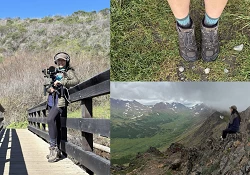
If you’re new here – hello! My name is Hannah, and I’m a storyteller of all things environment and climate, a documentary filmmaker, and a Television Producer here at NorCal Public Media. In this monthly newsletter, I share stories that give us new ways to think and care about our environment. My hope is to create space for an exploration of ideas, knowledge, and meaning-making together – so reach out if you have thoughts, questions, or just want to say hi. It’s as easy as replying directly to this email!
I recently had a friend over for one of our usual eat-snacks-and-vent-about-ecosystem-collapse sessions. While we sat on the carpet taking turns petting my dog, my friend brought up a familiar frustration: her partner struggles to engage with environmental issues on a personal, day-to-day level the way she does. “It’s not that he doesn’t care,” she told me. “It’s that he doesn’t feel like he can do anything about it – so he doesn’t.”
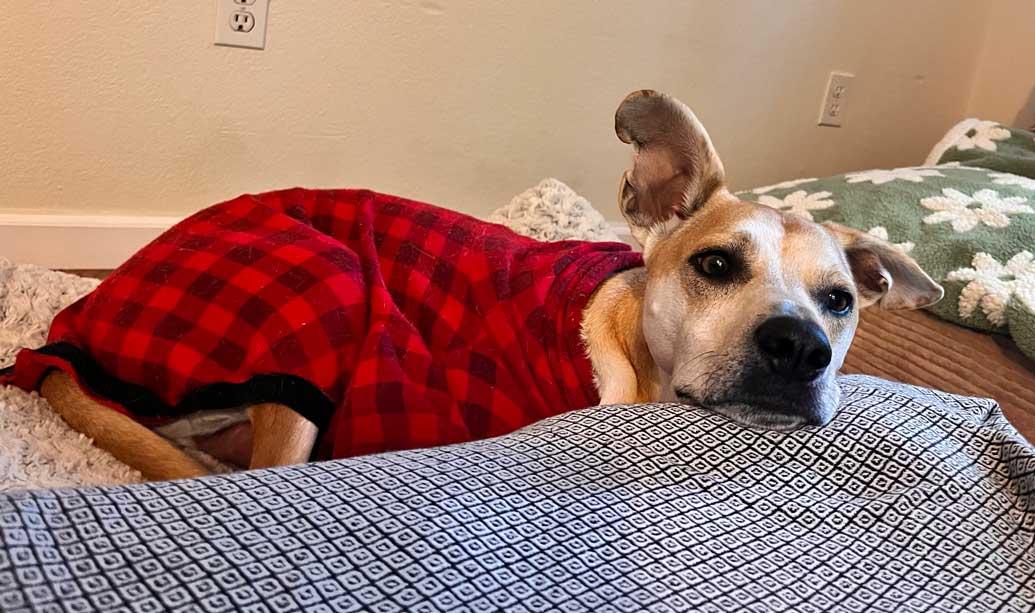 Milo is blissfully unaware of our environmental crisis. He just wants pets.
It’s a common challenge in social movements – motivating people to act when they don’t feel a sense of agency. But I can’t help but notice a pattern. I now have a growing mental tally of women in my life who share a passion for the environment, with male partners who don’t seem to feel quite the same drive. Ironically, these same women are often plagued with guilt about not doing enough for the planet. It’s a feeling I also grapple with on a near daily basis, and that at times can become overwhelming.
To look at the bigger picture, the environmental movement today is facing an expanding gender divide. In the U.S., women are far more likely than men to list climate change as their top voting issue. They tend to make more eco-friendly consumption and lifestyle choices, and are more likely to participate in environmental campaigns. (It’s worth noting that this divide tracks with an even broader national trend: especially within Gen Z, women are increasingly leaning towards liberal politics, while men are leaning conservative.)
In some ways, this makes a lot of sense. The natural world has always been associated with femininity, at least in the West (think “Mother Nature”). We associate caring about the environment with warmth and compassion, which have traditionally been perceived as feminine traits. But there’s also a more tangible factor at play: around the world, climate change and environmental issues disproportionately affect women over men. The UN estimates that 80% of climate refugees are women – and their displacement puts them at higher risk of gender-based violence. At the same time, women face systemic barriers to shaping our climate future: a lack of access to education, economic and social inequality, underrepresentation in STEM fields, the list goes on.
And so an argument emerged: the systems in place that are destroying our natural world are the same ones that oppress women. Coined as ecofeminism in the late 1970s, the movement grew in popularity with the message that gender equality and environmentalism go hand in hand. Today, international environmental organizations readily recognize the importance of uplifting women’s rights in climate action – but we still have a long way to go.
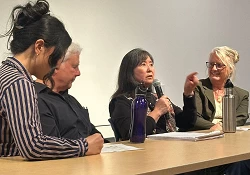
With March being Women’s History Month, I thought it would be the perfect opportunity to reflect on these interconnected topics. If you’re interested in seeing more about women and the environment, NorCal has a lot to offer, from Awesome Women Environmentalists, created by awesome woman filmmaker Nancy Kelly, to Climate California: Explorations, featuring eco-influencer Meg Haywood Sullivan. For more, check out our Women’s History Month collection on Passport.
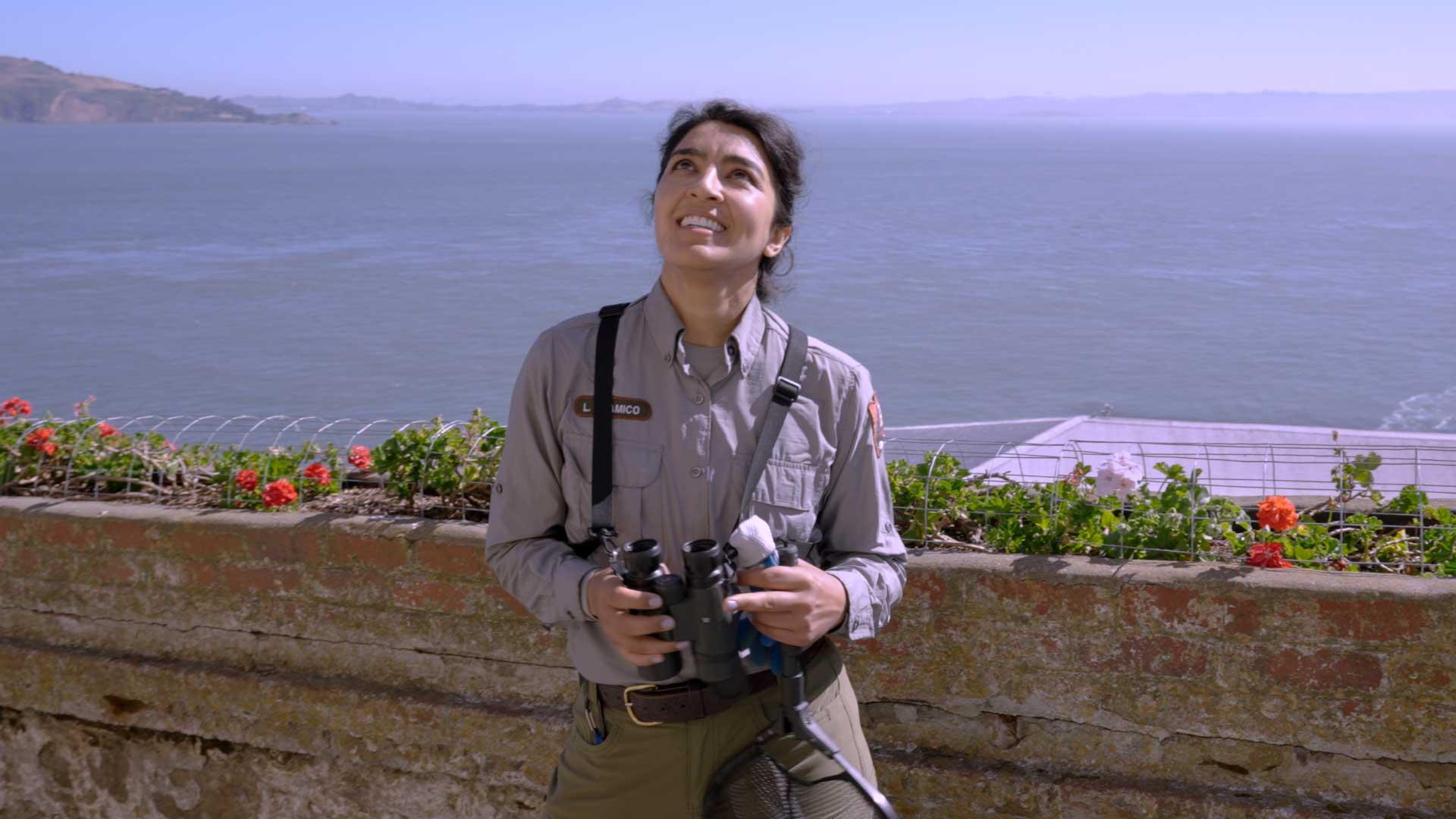 From Awesome Woman Environmentalists: The Bird Woman of Alcatraz
To cap off this month’s newsletter with some words of hope, I’ll leave you with this. I recently got back in touch with my high school video production teacher (hi, Mr. Renaud!), who kindly sent me a copy of Pip Williams’ The Dictionary of Lost Words. Set during the height of the suffrage movement, the novel follows a woman lexicographer named Esme, who documents and preserves words used by working-class women. She finds herself riddled with guilt for not being on the frontlines of activism – and as I mentioned earlier, it’s a feeling that’s all too familiar to me and my friends.
But something Esme’s godmother wrote to her helped ease my guilt: “You are not a coward, Esme. It pains me to think that any young woman would think such a thing because she is not being brutalised for her convictions. … Play a position you are good at, and let others play theirs.”
Of course, an important caveat here is that we must all actually play our positions, to the best of our abilities. I’m still searching for my position, but lately I’ve been feeling more and more that I’m on the right track. My question for you is, have you found yours?