
listen live

Dear Reader,

If you’ve ever picked blackberries growing on the side of a trail, you might have technically been breaking the law – and understanding why requires unpacking a little history. 

My name is Hannah Lee. I’m a storyteller of all things environment and climate, and a TV Producer at NorCal Public Media. In this monthly newsletter, I share stories that give us different ways to think and care about our natural world. 

Over this past winter, I finally started a hobby that I’ve been curious about for years. Under the enthusiastic guidance of Che Casul – a seventh-generation rancher in west Sonoma County who I befriended while filming our new docuseries – I began learning how to forage for mushrooms, one species at a time… and without poisoning myself in the process. 

We spent plenty of foggy days romping around the forest with friends, crawling over logs and through underbrush, and reaching into the damp soil to pull up mushrooms by the handful. It was an absolute delight.
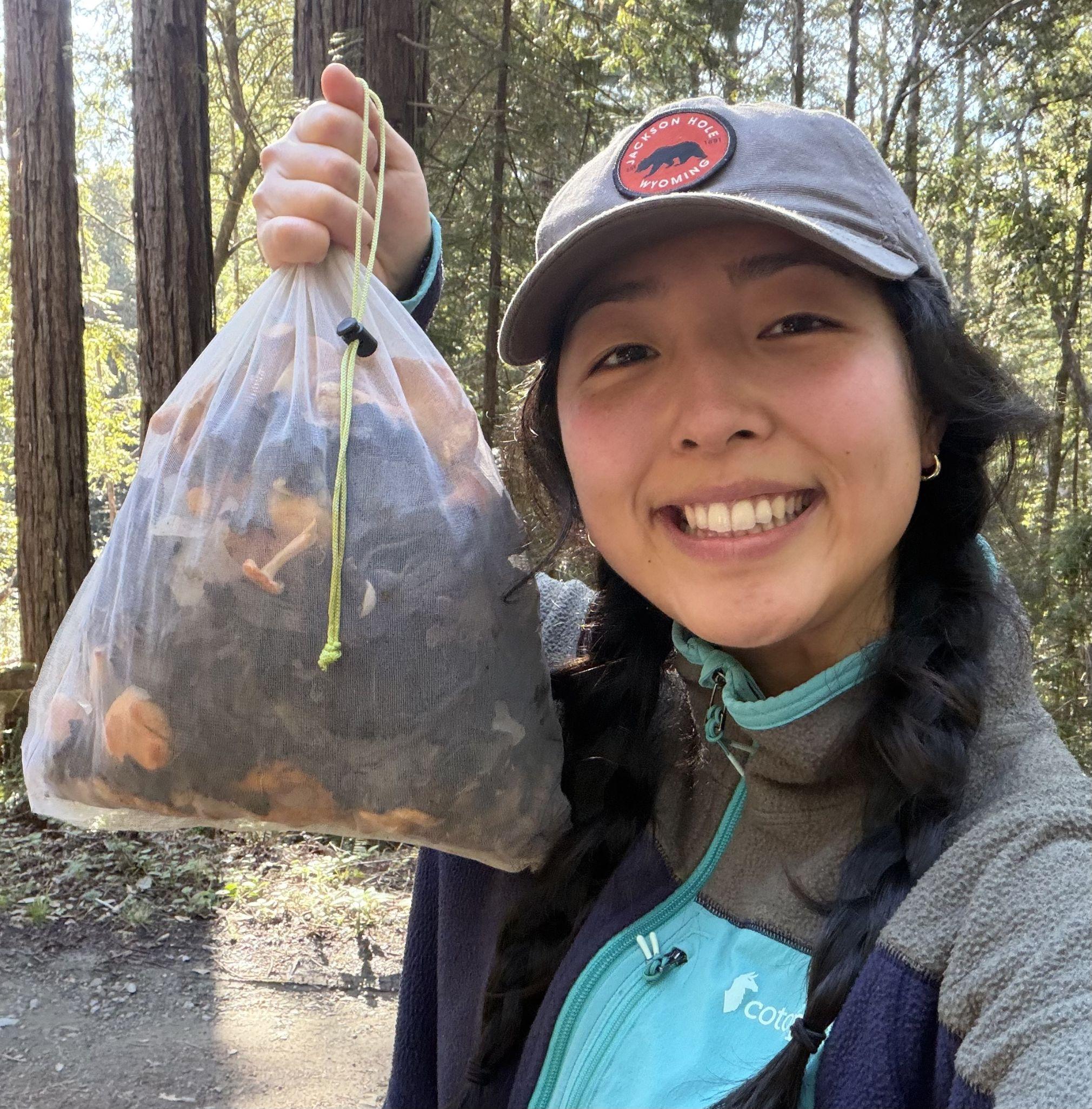
Gail Speaking PhotoA successful day of hunting for mushrooms!

But as mushroom season came to a close with spring, I started wondering: What other edible species live around me? 

It turned out to be good timing. Just a few weeks later, leadership at NorCal asked our team to pitch ideas for a new video series. So, I immediately got to work on developing a show about foraging for wild foods all over the Bay Area called Geronimo Eats the Bay, hosted by chef and forager Geronimo Ramos.

From the start, we knew the biggest challenge of filming the series would be finding locations. In the vast majority of public spaces and parks across the country, foraging is strictly prohibited – and the Bay Area is no exception.

But this hasn’t always been the case. It’s impossible to have a conversation around foraging and not talk about Indigenous peoples, who, before genocide and displacement by colonizers, sustained themselves through gathering edible and medicinal plants. And a perhaps lesser-known truth is that enslaved Black people also relied heavily on foraging wild foods to supplement their diets, as did poor white settlers. 

What I find especially interesting is that the right to forage actually used to be protected by law – not just on public lands, but even on private property. For much of American history, foraging was a common practice, and the food readily found in nature benefited everyone at no cost. 

Things changed towards the end of the 19th century, when anti-foraging laws started taking hold across the country. Backed by a preservationist view of nature, environmental advocates argued that foraging would allow public lands to be ruined by poor, uneducated rural Americans. Anti-foraging laws were also in many cases used to target and control communities of color. For example, through restricting their ability to gather and sell wild foods, newly emancipated Black families were sometimes forced to return to plantation work in order to sustain themselves. 

These laws still have a big impact today. Without the ability to gather the wild foods that grow around us, we’re more reliant on an inequitable food system that’s built on industrial agriculture. And we’ve become estranged from an incredibly powerful pathway for connecting with the natural world.

Of course, it’s important to still forage responsibly (without harming the surrounding habitat) and safely (without harming yourself). If you’re just starting out, be sure to work with a knowledgeable guide – and never eat something you can’t identify with 100% certainty. 

Keep an eye out for more coming soon on Geronimo Eats the Bay! I’ll be spending the next several weeks deep in filming and editing, and I can’t wait to share it with you.
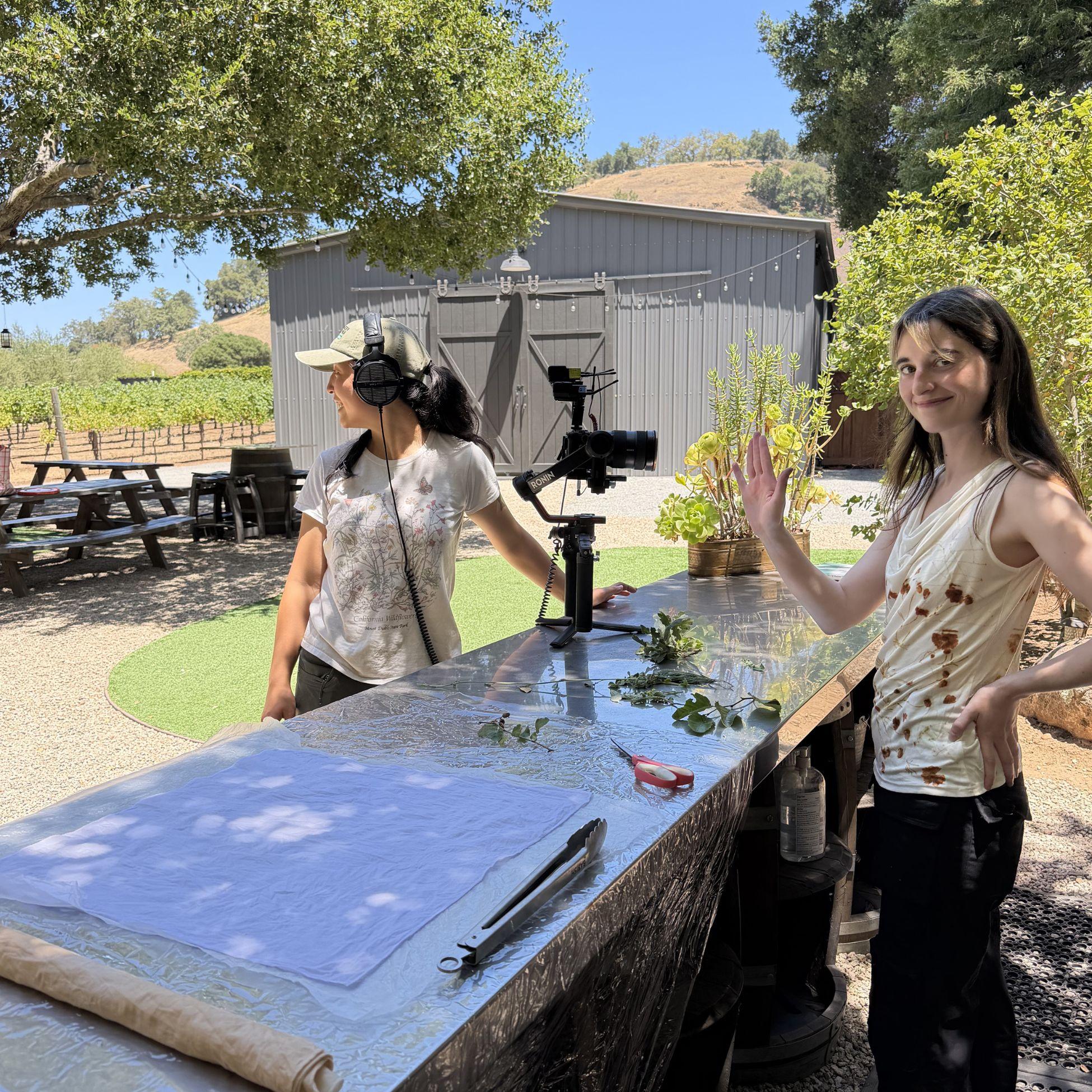
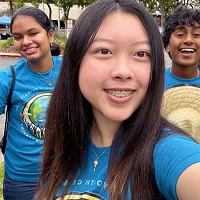
Hannah Gail SelfieBehind the scenes on Geronimo Eats the Bay.

As always, my hope for this newsletter is to create space for an exploration of ideas, knowledge, and meaning-making together – so please reach out with your thoughts on this edition of Our Planet, Our Voice. It’s as easy as replying directly to this email, and I would love to hear from you!

My question for you this month is: What edible species grow around you?

All my best,

Hannah
The contents of this newsletter were written and edited entirely without the use of generative artificial intelligence.

Our Planet, Our Voice was created by Darren LaShelle, Kelly Olsen, and Hannah Lee. It is edited by Shandra Back.


In Conversation with Gail Yamamoto Seymour

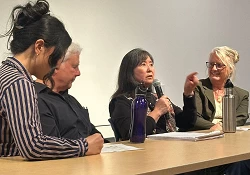
Dear Reader, On a breezy afternoon in May, I sat down at a park for a conversation with Gail Yamamoto Seymour, a lifelong environmental scientist in Sonoma County and third generation Japanese American. I first met Gail at a screening of our docuseries, Climate California, and she got in touch with me a few months later by replying to this newsletter. I learned she was retired from a decades-long career in government conservation work, and now dedicates her time to environmental justice…
Gail Speaking Photo

The Moral Quandary of Buying New Boots

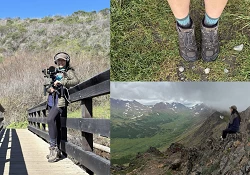
Dear Reader, I’ve owned my current pair of hiking boots for years now. They’ve gotten me through everything from neighborhood walks to backpacking trips, and as a TV Producer here at NorCal Public Media, they’ve been my go-to for long days of filming. Now with worn tread, fraying, and holes, these boots are long overdue for retirement – but I can’t seem to let them go. My name is Hannah Lee, and I’m a storyteller of all things environment and climate. In this monthly newsletter, I share stories…
Boots Collage

The Problem With Earth Day

Dear Reader, My name is Hannah Lee. I’m a Television Producer here at NorCal Public Media, and a storyteller of all things environment and climate. In this monthly newsletter, I share stories that give us new ways to think and care about the natural world. But, to be honest, I’ve been really struggling to write this month’s edition. Work and life have both been moving at breakneck speed these days – especially with our Center for Environmental Reporting. In the next month alone, we’re…
The team at work 1

Gals Going Green: Why women are leading the climate fight

Dear Reader, Firstly, I want to give a heartfelt thanks to everyone who read and responded to last month’s newsletter. I was delighted by how many readers replied with their own opinions, feelings, and knowledge! Because it only seemed right, I set out to personally reply to all of them – an effort I’m not sure is wise to repeat due to the sheer amount of time it took. So, moving forward, please be assured that I’ll be reading your messages and taking them to heart, even if you don’t hear back…
Milo

Fighting climate change isn’t about protecting nature

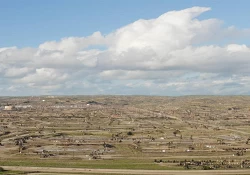
Dear Reader, On a 110℉ day in the summer of 2024, I found myself in the middle of the Kern River Oil Field in Bakersfield, California. I was part of a team of producers working on NorCal Public Media’s new documentary series about climate change, and our very first episode had brought us here – to the fifth largest oil field in the entire United States. Every direction I pointed my camera, the footage looked the same: thousands of oil derricks slowly, mechanically pumping out of the…
Bakersfield

Environmental News

November 17, 2025

Proyecto Titi

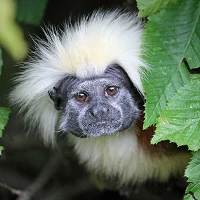
Cotton-Top Tamarins are a small monkey known for its unique hairstyle and high pitched vocalizations native to North Colombian forests.
November 17, 2025

The Misool Foundation

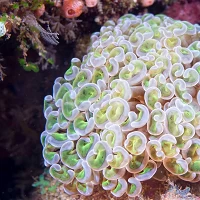
With rising ocean temperatures, pollution, and overfishing, coral populations are under threat. The Misool Foundation is working to reverse this decline around Misool Island in Indonesia.
November 17, 2025

Spectacled Bear Conservation

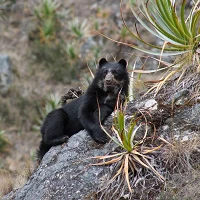
Machu Picchu in Peru is one of the most biodiverse regions on our planet, home to a stunning variety of plants and animals, including the Spectacled Bear.
November 17, 2025

Pangolin Crisis Fund

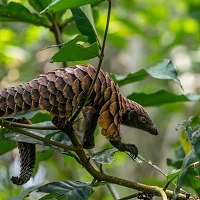
Pangolins are the world's most trafficked mammal. The Pangolin Crisis Fund works across Africa and Asia to eliminate the demand for trafficking and poaching protecting this animal from extinction.
November 17, 2025

MarAlliance

Sharks and rays are key to the health of many marine ecosystems around the world, and are among the longest lived marine animals.
Nov 17, 2025

Global Penguin Society

Penguins are one of the most resilient animals on the planet, having evolved over 60 million years ago and adapted to survive extreme environments –…
Nov 17, 2025

Rhino Recovery Fund

While historically solitary and docile creatures Rhino’s find it difficult to protect themselves against humans.
Nov 13, 2025

Lion Recovery Fund

While seen as a strong and resilient species Lion numbers are dwindling. The Lion Recovery Fund works to help recover struggling populations.
Sep 10, 2025

BeautifySJ

When San Jose volunteers feel the need to clean, BeautifySJ is there to supply all the tools and services necessary to facilitate their anti-litter…
Sep 10, 2025

The Trash Punx

“We’re a group of people…who want nothing but a cleaner world!”
May 27, 2025

The 3rd Annual Food and Wine Awards Recap

An unforgettable evening that brought together food lovers, changemakers, and public media supporters to celebrate the best of the Bay Area’s farms,…

Northern California
Public Media Newsletter

Get the latest updates on programs and events.